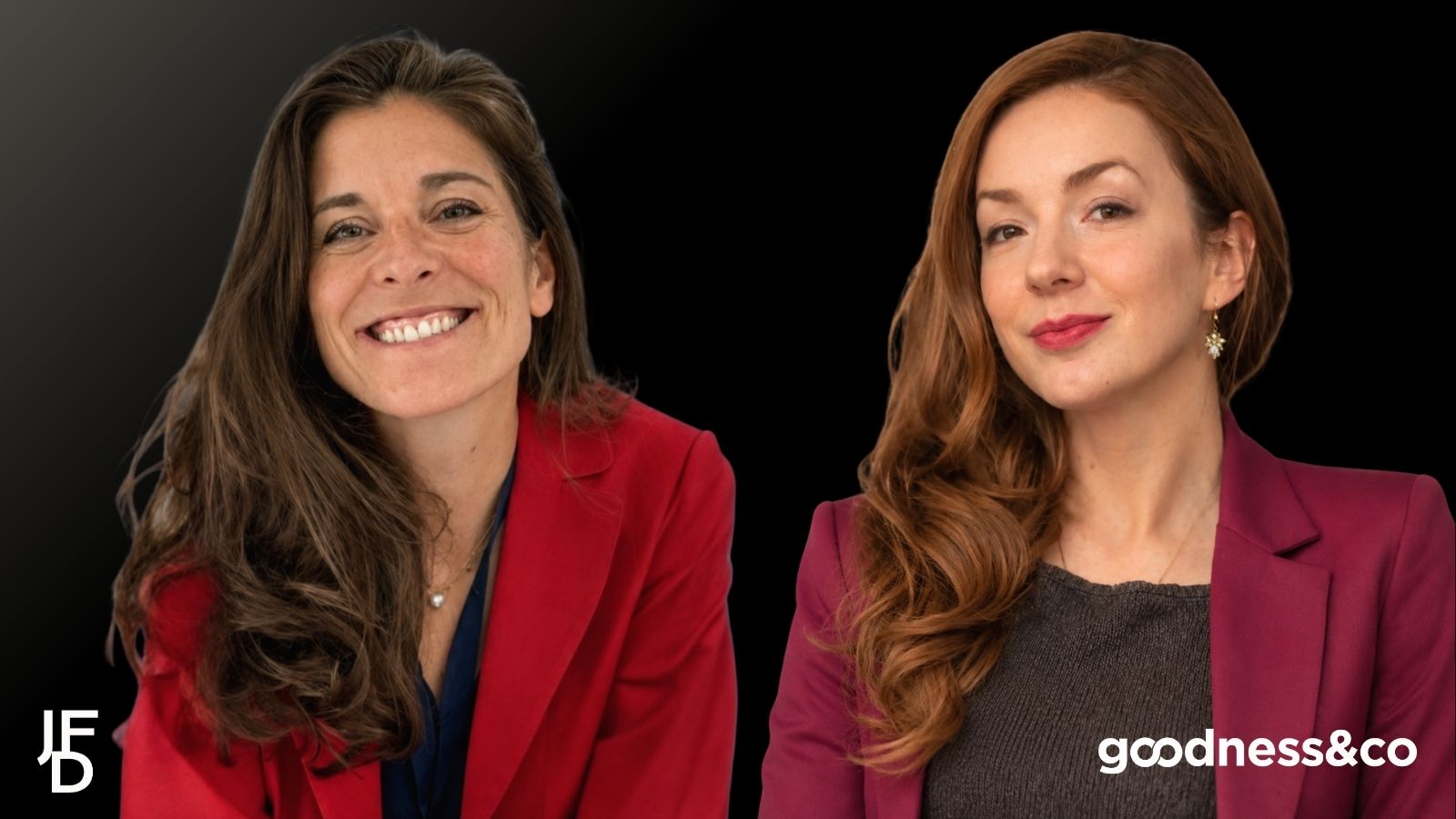

Meet a JFD ambassador who is changing codes and encoding change.
Can you tell us about your career? What led you to become a developer?
I’d always wanted to become a teacher-researcher in mathematics, like my father. My mother, who was also passionate about maths, had been wrongly assigned to a literary course – an injustice that had a profound effect on me. So it was natural for me to choose the maths stream in high school, and then university.
In my first year, I discovered algorithms and code. It was a revelation: computing was maths on a computer. I already loved machines, and this discipline offered me a concrete, fun and creative approach. So I decided to change direction.
It wasn’t easy to tell my parents about it, but they supported me. Despite the doubts of some, I’ve never regretted the decision. Looking back, I think my passion for computers was there from childhood: at the age of 5, I was already reading books about computers and tinkering with the family computer units.
Today, I know that what I loved about maths, I found in computing – only better.
You are also a content creator under the name FemmeDeTech. What inspired you to speak out online, and commit to greater inclusion in tech?
During my studies, and even at the start of my career, I often noticed one thing: there were very few women around me.
A striking example is my research master’s degree. There were about forty of us, spread over several options, and I was the only woman. It always seemed strange to me. Why does this field attract so few women?
When I looked into the matter further, two things struck me. Firstly, the lack of female role models in tech. Secondly, the gender stereotypes that are ingrained from childhood: people say that robots are boys’ toys, that computing is “a man’s thing”, and that girls would be better suited to social professions.
That’s precisely why I chose to express myself online, on the platforms that young people use most: Instagram and TikTok. It’s not always easy, because these are primarily entertainment platforms. People don’t spontaneously go to TikTok to learn about algorithms! So I try to create creative formats, sometimes funny, sometimes engaging, adapting the trends to my world to capture the attention, especially of young women.
It’s essential to show more female role models in tech, especially in positions of responsibility. A lot of young women tell me that they’re reluctant to go into tech because they’re afraid they won’t be able to reconcile their careers with their personal lives. I want to prove to them that it’s possible, not least because of the flexibility of teleworking in this sector.
What concrete actions do you think should be prioritised to make tech more inclusive, particularly in the field of AI?
I’m convinced that to make tech (and more specifically the field of artificial intelligence) truly inclusive, we need to take action at all levels, starting with the home and school.
It is essential that parents stop passing on gender stereotypes, such as the idea that “dolls are for girls” and “cars are for boys”. Even the cartoons they watch or the books they read influence their choices. These little preconceived ideas, repeated from an early age, hinder girls’ access to science and the digital professions.
But action doesn’t stop there. School careers guidance, at both lower and upper secondary level, also needs to become more open. Young girls need to be encouraged to take up scientific and technological subjects, and so broaden their horizons.
You are a JFD ambassador: what does that mean to you? What made you want to join forces with us?
Being a JFD ambassador is much more than just a title: it’s a genuine commitment to diversity and inclusion in tech, values that are very close to my heart.
What made me want to join this great community was the conviction that we are stronger when we join forces. JFD embodies this collective dynamic, where everyone can find their place, develop and make their voice heard.
Personally, I know how essential it is to have inspiring role models and a support network to dare to take the plunge and persevere in an often intimidating environment. That’s why I want to share my experience and encourage not just young girls, but anyone who wants to change their life or career, to believe in their potential, overcome their doubts and assert themselves in tech.
Solidarity is a powerful force. Joining a network like JFD means opening up to opportunities, growing together and helping to move the sector towards greater fairness.
As an ambassador, I’m proud to carry this message and play an active part in this great adventure. Because tech is also our future, and it must be built with all voices.
If you could pass on one message to young girls who still doubt their place in tech, what would it be?
I would like to say to the young girls who are still in doubt: the way is clear and tech needs you.
It’s simply unthinkable to build the world of tomorrow without the contribution of the whole of humanity.
The good news is that it’s never too late to get started. Whatever your background, whether you have a degree or not, it’s your curiosity and motivation that will make all the difference.
So how do you get started? Get informed, explore online resources, try out small projects and, above all, join communities of women in tech. Don’t be afraid to ask questions, to try things out, and even to make mistakes, because that’s how you learn and progress.
I know what it’s like to have doubts, to wonder if you really belong. I too have asked myself a thousand questions. But today I can tell you one thing: if I’ve done it, you can do it too. So don’t hesitate any longer, dare to take the plunge. Tech needs you, your unique vision and your talent.
What about a company that wants to make a real commitment to greater diversity in its tech teams?
To a company that really wants to make a commitment to greater diversity in its tech teams, I would say:
Diversity must not remain a mere slogan, it is a real commitment that requires concrete and sustainable action.
Here are a few ways forward:
- Review your recruitment processes. Draft inclusive offers, train your teams to limit unconscious bias, and be proactive in seeking out diverse profiles.
- Give women more responsibility. Offer them positions of responsibility and support them with training and mentoring so that they can fully develop and progress in their careers.
- Create an inclusive environment. This doesn’t just mean hiring different profiles, but above all creating a culture where everyone feels free to be themselves, where diverse ideas are listened to and valued.
- Work with committed players. Work with schools, associations and communities that are committed to diversity.
Committing to diversity means investing in your company’s wealth of talent and innovative strength. It’s a long-term undertaking, and one that should become a pillar of your corporate culture. So go for it with ambition and consistency: tech needs every voice, at every level.