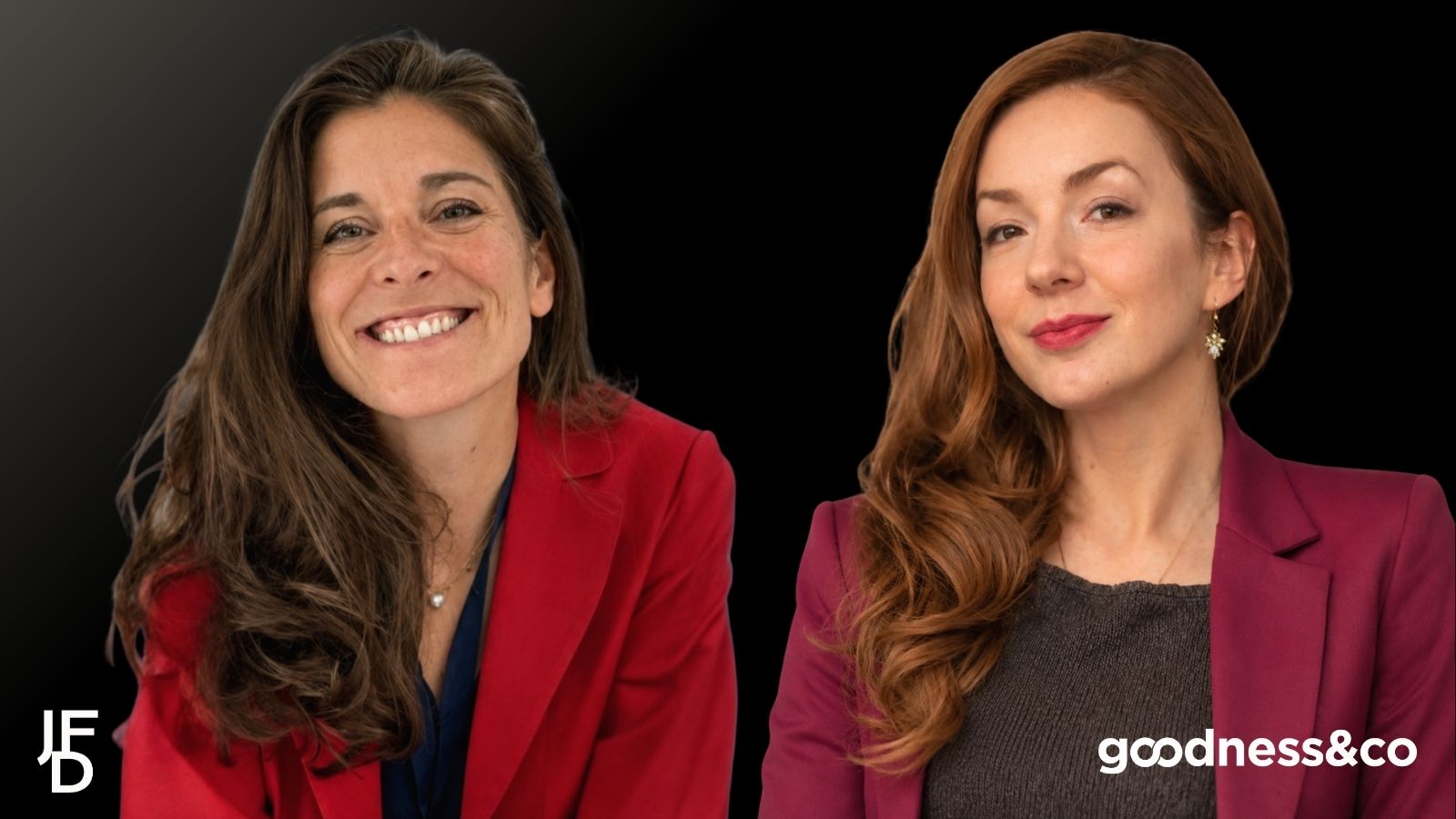


You are one of the few women at the head of artificial intelligence companies. What is your background?
I’ve had several careers! First, I graduated from the Quebec Conservatory of Music with a degree in oboe, before switching to data science. After my bachelor’s degree in statistics and my master’s degree in business intelligence, I gained over 15 years’ experience, including as an AI analytical leader at Desjardins.
In 2018, I co-founded Videns to put AI to work for businesses with a human and ethical approach. I am also a teacher at HEC Montreal, as I am also keen to pass on my knowledge to new generations.
Videns has just been awarded B Corp™ certification. What concrete impact does this certification have on your internal practices, particularly in terms of governance, inclusion and transparency?
B Corp™ certification embodies our commitment to responsible AI. It validates our efforts for a positive impact in terms of governance, inclusion and transparency. At Videns, every project puts people at the centre of technology, promoting ethical practices that meet today’s challenges.
B Corp is much more than a label, it’s a motivation for us to go further and embody a business model that is inclusive, respectful of diversity and focused on collective well-being, both in Quebec and internationally.

As an active player in Europe and Quebec, do you observe any regional differences in expectations towards responsible and ethical AI?
Yes, there are marked differences. France has taken the lead in terms of ethical regulation in AI, and algorithmic sovereignty is a crucial issue there: algorithms must respect local cultural and linguistic specificities.
In Quebec, awareness of these issues is growing, inspired by European initiatives. I can therefore see a common desire to ensure that AI technologies reflect local values, although Europe is moving more quickly in integrating these principles into legislative frameworks.

Sarah Legendre-Bilodeau with Justin Trudeau, Prime Minister of Canada
What are your next goals and how do you see your industry evolving as AI and inclusion become more prominent?
As AI becomes more and more a part of our lives, Videns aspires to continue promoting inclusive AI, incorporating practices to limit bias and ensure representativeness in automated decisions.
Our aim is to design evolving algorithms that are aligned with a society in constant transformation, because we know that what was considered adequate a few years ago is not necessarily adequate today.
AI projects must include in-depth ethical reflection, particularly in sectors that have a direct impact on individuals (marketing, HR, health, education, etc.).
We are working to make our solutions fairer, more respectful and more sustainable.
What does your commitment to JFD represent as a member of the JFD Club and what advice would you give to companies wishing to make a commitment to responsible and inclusive AI?
JFD offers me an inspiring community of women in tech with rich backgrounds, transcending borders, who bear witness to the propulsion of women in a professional context.
For the use of inclusive AI, I advise companies to invest in analysing their data, as it is the raw material for AI but already contains potential biases. Solutions are always developed with good intentions, but that’s not enough.Upstream thinking is essential to avoid abuses and create solutions that are fair, beneficial and sustainable.
Sarah Legendre-Bilodeau, Co-founder & CEO Videns, JFD Club member
With nearly 20 years of experience in the field of data science, Sarah has evolved in various application contexts including marketing, finance, insurance, distribution, technology, and public health.
Having co-founded Videns in 2018, she serves as the CEO. Over the past few years, she has assisted numerous organisations in Canada and France in developing innovative and high-performing data-driven solutions.