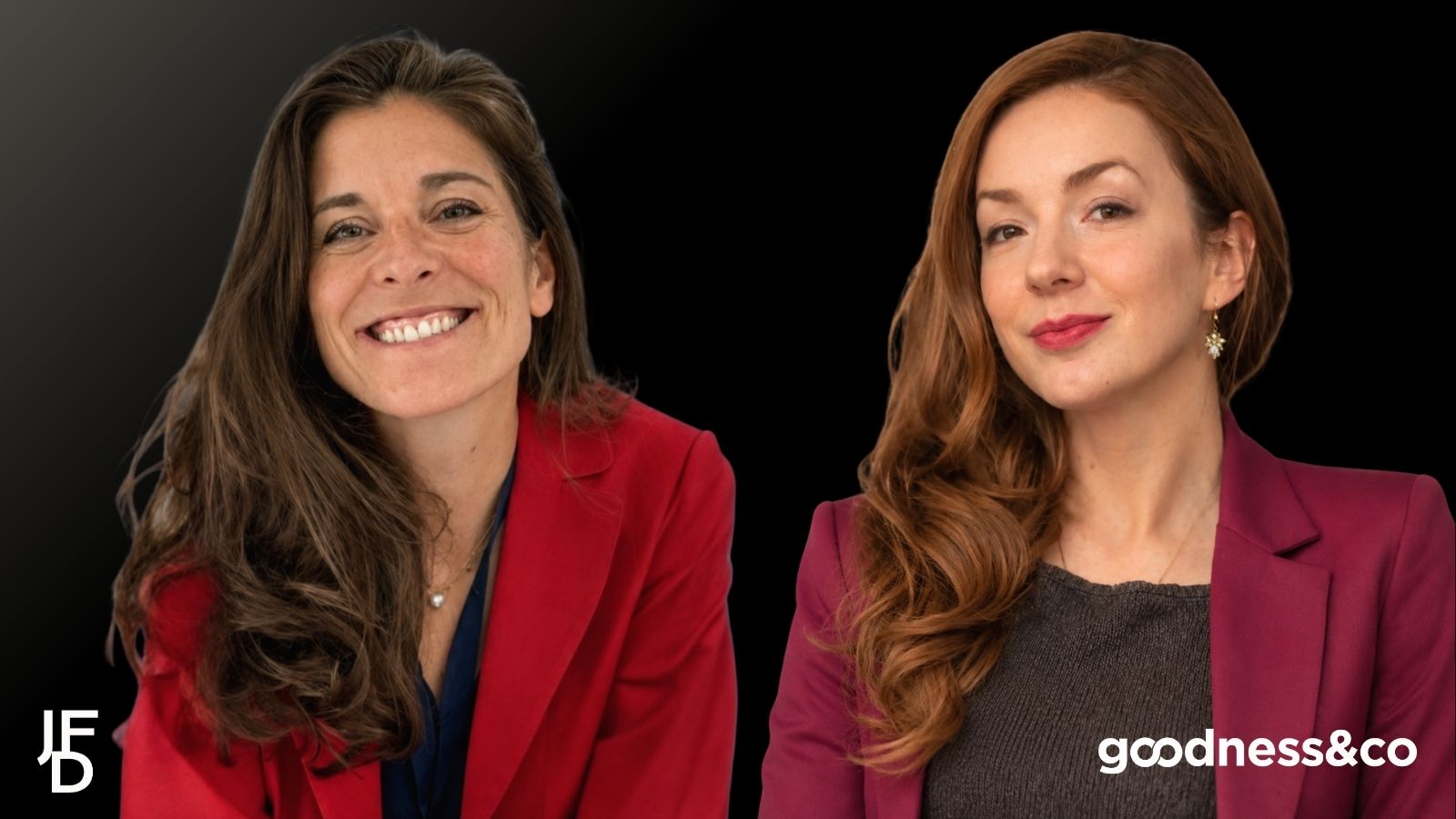

You started out in medicine before moving into electronic engineering, IT and then mechanical engineering. What was the common thread behind these choices and what prompted you to create ONTBO?
From the start, I have pursued the same goal: to improve the relationship between humans and machines, and this involves humanising the latter. Understanding how intelligence works — human first, artificial second. Medicine has given me a biological perspective on cognitive functioning. Electronics gave me the tools to model systems, and fluid mechanics allowed me to understand how a structure can adapt, learn and react.
The trigger for creating ONTBO came when I realised that current AI systems, despite their power, were limited to pulling out the data they had absorbed without processing or prioritising it: they predict words, but they don’t remember, contextualise or reason. An essential layer was missing: cognition. ONTBO was born to change that.
How does ONTBO differ from current approaches to large AI models?
While large AI models are based on a logic of hyper-augmentation, with ever more parameters, more data and more computing power, ONTBO takes the opposite approach: adding a cognitive layer that brings continuity, understanding and memory to existing models while reducing their computational costs.
ONTBO is not a new LLM, but a complementary intelligence: long-term memory, explainable reasoning, context management and real-time learning. This approach enables AI agents to be more reliable, more consistent, less costly and, above all, more intelligent — not in terms of size, but in terms of understanding.
Do you already have any concrete use cases or significant feedback from the field?
Yes, and it is precisely this feedback from the field that confirms the value of our cognitive approach. ONTBO is already integrated into several real-world environments — internal assistants, business co-pilots and automated agents — where contextual continuity is critical.
The results are clear: an average 95% reduction in token costs, a +90% improvement in contextual consistency scores, and, above all, the world’s leading recall rate, more than 20 points ahead of competing solutions.
Teams using ONTBO have noticed a particular improvement in the reliability of their agents: better continuity from one interaction to the next, fewer hallucinations, and the ability to maintain a logical thread thanks to structured long-term memory.
These deployments demonstrate that cognition is no longer a theoretical concept, but a concrete operational advantage for making AI more stable, more consistent, and much more effective.
Finally, how does JFD’s United by Tech theme resonate with your vision of AI, and how can we ensure that technology brings people together rather than driving them apart?
I am convinced that technology only makes sense if it creates connections, understanding and trust. AI should not replace humans, but help them to think better, make better decisions and collaborate more effectively.
For AI to bring people together rather than isolate them, it must respect context, memory and human intent. AI should not seek to impose answers, but to support understanding. This is precisely ONTBO’s reason for being: to make AI more reliable, more explainable and more human. Today, we can no longer afford to create black boxes.
Trust comes from continuity, transparency and consistency. By giving AI systems a form of cognition — contextual memory, structure and reasoning — we create tools that strengthen the bond between individuals, rather than weakening it.
I believe that United by Tech champions technology that connects us through understanding rather than one-upmanship. More data, more performance, more speed… What’s the point if we have to keep prompting data that has already been stated chronologically? We’ve generated enough; it’s time to understand. And that’s the path we must take together.
***
Athénaïs Oslati, founder & CEO of ONTBO and JFD Member
Athénaïs Oslati is a cognitive artificial intelligence engineer and CEO of ONTBO, recognised for her work on cognition applied to AI, notably by Forbes 30 Under 30, the French Government, and several major innovation awards.
She designs systems that think — not to imitate humans, but to understand them.
In founding ONTBO, she is pursuing a clear ambition: to equip AI agents with real cognitive continuity, capable of long-term memory, contextual reasoning, and real-time learning.
Her research lies at the intersection of neuroscience and artificial intelligence, with the goal of moving beyond machine learning to machine understanding.
Her impact has been recognised by the i-Nov prize, the Tilder Prize for Women Engineers in AI 2025, and by Challenges magazine, which ranks Ontbo among the 100 companies to invest in.
Athénaïs advocates a vision of AI that is more reliable, more context-aware and less energy-intensive.
“AI that remembers is progress. AI that understands is a (r)evolution.”